Featured Content
Resource: Canned Whale Meat
Eating whale, a controversial issue, is permitted in Japan. In fact, whale meat provided a key source of cheap protein in the early postwar period. A discussion of this picture can be used as an entry point to discussing issues of cultural taboos, cultural relativism, and the extent to which the debate over the protection of whales is based on "science" vs. culturally ingrained ideas.
Resource: Timeline of Global Climate Action
From the introduction of the environment as a UN problem in 1968 to efforts at reaching a post-Kyoto settlement, read on for a brief timeline of international action for environmental protection. Please add to the conversation and suggest other important events by using the "discuss" feature.
Resource: The Japanese Medical System
This resource offers a brief overview of the health care system in Japan, gives links to relevant Japanese and American news articles, and suggests thought questions to use in the classroom. The resource is particularly useful for classes discussing health care reform.
Resource: Origami Hina Doll Instructions
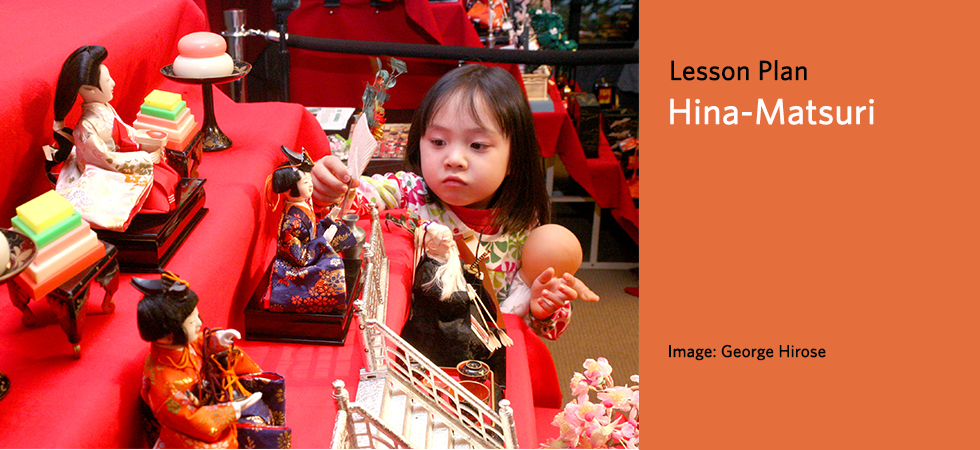
These easy-to-follow instructions show how to make origami hina dolls to celebrate Hinamatsuri, or the Doll Festival.
Lesson: Living Efficiently: Daily Energy-Saving Practices from Totoro and Today
Grade Level: Elementary,SecondarySubject Area: Science & Environmental Science
Hayao Miyazaki's much beloved film, My Neighbor Totoro, is used to spark discussion about daily energy-saving practices.
Education Programs are made possible by generous funding from The Freeman Foundation.
Generous support for Education Programs is provided by Continental Airlines.

Additional support is provided by The Norinchukin Foundation, Inc., Chris A. Wachenheim, Joshua N. Solomon, Jon T. Hutcheson, Lesley Nan Haberman, Joshua S. Levine and Nozomi Terao.
Student and Family Programs are supported by the New York City
Department of Cultural Affairs, in partnership with the City Council.